Why 16K Immersive Doesn’t Deliver The Quality You Think
16K is a number currently being tossed around as if it guarantees great Apple Immersive Video (AIV).
While being able to ingest ProRes Resolve files is important for both VOD and live workflows, delivering at the 16K source resolution does not have the results people believe.
Efficiency is the true benchmark of quality. The reality is that “16K AIV” on current-generation hardware often prioritizes a marketing metric over the actual viewing experience, frequently ignoring the intentional design of hardware decoders and human optics. Having a proper frame rate and field of view is far more important.
The Math
To understand the 16K claim, we have to look at Pixels Per Degree (PPD). In immersive media, raw resolution matters less than how many pixels are packed into your specific field of view (FOV). We want to target full utilization of every pixel available on the Apple Vision Pro. Let’s use 34 as our target PPD as that’s the rumored average PPD. Now the following math is going to make a number of assumptions, so if you’re building a headset, don’t just take this as the guide for your lenses:
34 ppd * 180 degrees = 6,120 pixels per eyeFor a stereoscopic (3D) delivery, that results in a total width of 12,240 pixels. Even if we push the math to a theoretical 40 PPD, we only hit 14,400 pixels. Notice that this is below the 16K resolution by over a thousand pixels.
While you can certainly create this file, the Apple Vision Pro decoder is precision-tuned for 90 FPS. High-frame-rate playback is essential for comfort in immersive experiences, and a 16K/90fps stream currently exceeds the optimized playback profile of the device.
What Does “Pro” Actually Look Like?
If you want to see the current ceiling of immersive quality, look at Apple’s own HLS (HTTP Live Streaming) playlists for flagship content like Submerged. Alternatively, you can look at SpatialGen’s work with the Lakers VOD experiences for Spectrum SportsNet.
When we strip away the metadata and focus on the resolution tiers, the highest manifest levels reveal a clear, intentional standard:
#-- High-Tier Apple Immersive Stream --
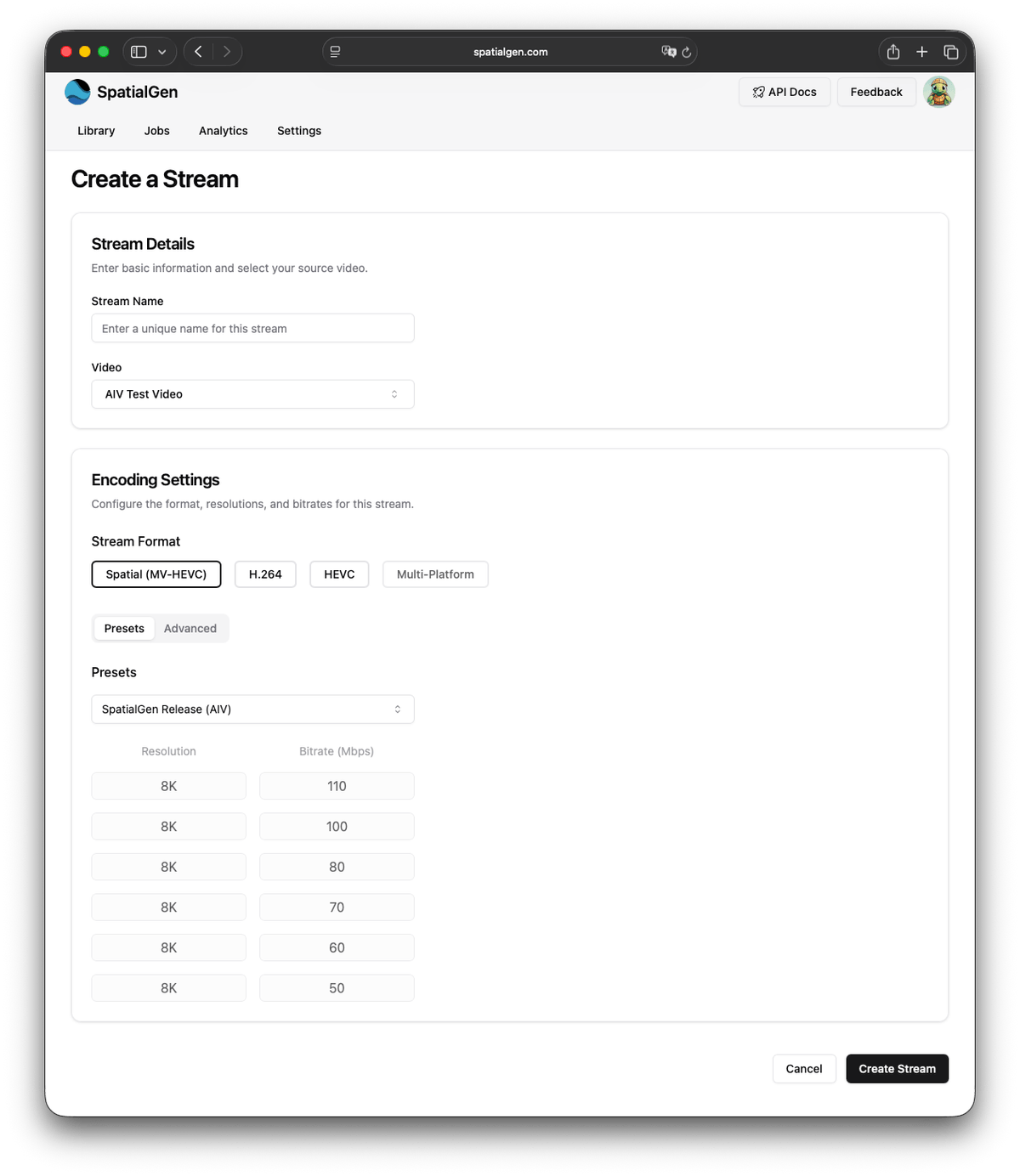
#EXT-X-STREAM-INF: RESOLUTION=4320x4320 (Per Eye)
#Avg Bandwidth: 91.4 Mbps | Max: 148.3 Mbps
A resolution of 4320 pixels per eye equates to an 8.6K width. This is the gold standard for high-frame-rate immersive content today. Some creators are doing incredible work with 16K APMP (Apple Projected Media Profile) at lower frame rates (30–60 FPS), such as some of Explore POV and Immersive India’s old videos. However, claims of “16K Apple Immersive Video” at a native 90 FPS are simply not aligned with the current silicon optimizations of the device.
The “Cropping” Illusion
To claim the “16K” label, some platforms employ a misleading tactic: they significantly crop the Field of View.
By narrowing the FOV and packing the same number of pixels into a smaller window, the PPD increases, but the “immersion” is sacrificed. The effects of this strategy are shown through warped views and improper world scale. One of the magical effects of Apple Immersive Video is being placed into the scene. When you’re watching an NBA game in Spectrum’s Front Row, you are there with the players and truly placed courtside. If the distributor were to artifically crop the image to increase PPD, the scale would be sacrificed entirely and ruin the immersion. Players would look short or squished.
| Feature | Apple Immersive Video | 16K Crop Tactic | The Trade-off |
|---|---|---|---|
| Field of View | 180°+ | 130°-145° (Heavy crop) | Loses peripheral vision and the “presence” of the scene. |
| Visual Comfort | Optimized for eye-comfort and eye movement | Distorted scale (squishing)/PPD | Narrow FOV can lead to nausea. |
| Decoder Support | Matches device limits | Overloads the decoder | Risk of dropped frames, heat, and playback stutter. |
You can see an example of this technique below:
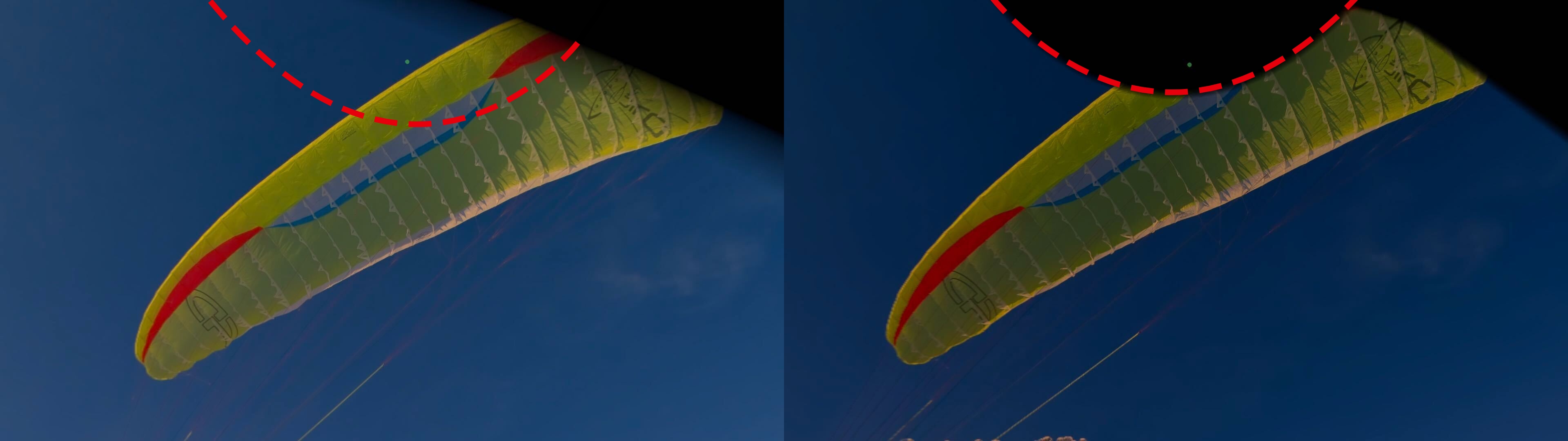
The difference in color is a different topic.
As engineers and creators, our duty is transparency. Misleading creators about what the hardware can actually decode leads to bloated file sizes, playback stutters, and diminished trust in the medium.
The Future: Static Foveation
The “K” race is a distraction from what actually works: Static Foveation. We discussed this during our presentation at Apple.
Research suggests the center of the Vision Pro lenses may hit upwards of (44.4 PPD), while the periphery is lower. Instead of wasting bandwidth on a 16K file the device can’t play, we should focus on maximizing pixel density where the eye actually looks.
Static foveation properly attributes pixels to the target area, increasing PPD, while modifying the dynamic metadata for each camera. This results in increased PPD without sacrificing the proper world scale of the image.
Through static foveation, the viewer can be placed on a hike and see the details in a stunning remote distance, or up close at a performance seeing every word dance off an artist’s lips.
Inside DaVinci Resolve, creators can now apply static foveation. Blackmagic provides paramaters to alter the focus point, the slope, and more. Every creator is now empowered to find the exact configuration that works for them.
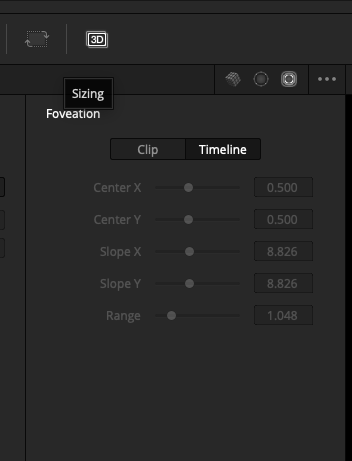
The workflow is fully supported at SpatialGen. SpatialGen will handle the foveation properly for the dynamic metadata and all transcodes will generate the same foveation settings applied in Resolve.
One last note, creators may want to consider leveraging a ProRes Bundle Export or the recently detailed full-resolution MV-HEVC export. This will ensure an incredible quality source video which will be used for encoding. More details on this process can be found on our blog or on Main Course Film’s tutorial.
The takeaway? Don’t chase a “K” number. Chase the PPD, the format, and the story. That’s where the real immersion lives. The magic is not found in unique players, it is found in unique experiences.
SpatialGen
contact@spatialgen.com